Addiction
And choices...

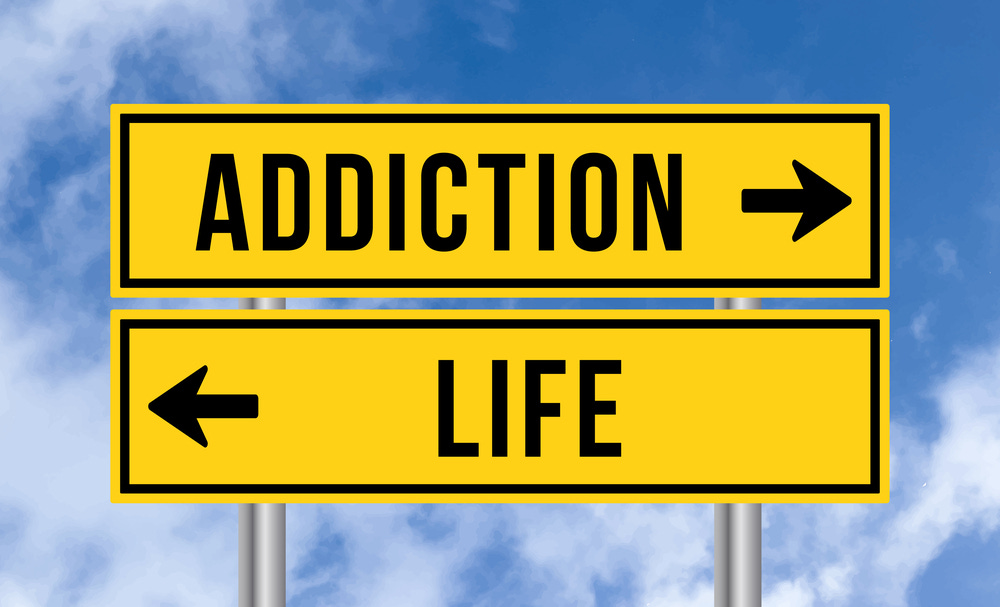
This will be the second part of the addiction series, where we discuss a person’s actual descent into addiction through a series of choices that they make, ignoring all of the urgent warnings along the way. We may or may not get to that narrative today, it depends on how well my writing brain feels like working at the moment. If it decides to crawl out of its slumbering hole, then this will be the preamble. If not, then we will dive into the piece pretty quickly, because reaction brain will cattle prod writing brain, and we will go from there.
I am going to preface this by saying this. The last two posts explained why psychopaths do not experience addiction. That, admittedly, leaves me without the real ability to understand what it must be like. I get that. I know that I am operating from a position of having no idea what I am talking about.
That said, when I see addicts, and I will make it a point here to differentiate between addicts and those that are dependent on pain medication due to long term injury or illness, when I see actual addicts, I find their choices weak. Granted, I can’t be addicted to things, and I should probably not have an opinion on the matter due to that, but, I do. The story that we are about to go through pretty much exemplifies why I have the opinion that I do, as well.
Interestingly, before I heard this narrative, I had already arrived at the conclusion that I was perhaps too mean when it comes to my criticism of addicts. However, this story pretty well laid out exactly how it looked from the outside to me. People that are chasing some feeling that they think is thrilling, and negotiating everything in their lives away to achieve it. When I see someone that is detrimentally harming themselves to chase some emotional BS, I am quite critical of that.
Psychopaths can’t feel what you feel, and no, we don’t emotionally suffer, but we can physically suffer, and still there is nothing in me that gets the draw to addiction. I understand cognitively that people emotionally suffer, and while I wouldn’t say this to them, as it is perceived as cruel, when I hear that they are using drugs as a coping mechanism, my internal voice says, that’s pathetic. They are avoiding what they are here to learn. Their whole reason to be on this planet, and they are running from it to chase some artificial pleasure.
After all:
To live is to suffer. To survive is to find meaning in the suffering.
~Gordon W. Allport
This quote is often wrongly associated with Friedrich Nietzsche. The phrasing comes from the preface to Viktor Frankl’s book Man’s Search for Meaning, written by psychologist Gordon W. Allport. Allport summarized what he saw as the central theme of existentialism with roughly those words: “To live is to suffer, to survive is to find meaning in the suffering.” Frankl’s book details his search for the meaning behind his own suffering at the hands of the Nazi’s in concentration camps, and how he was able to work through all that he saw there.
Nietzsche did write about suffering, and has a quote that also goes with my thinking:
“Man, the bravest animal and most prone to suffer, does not deny suffering as such: he wills it, he even seeks it out, provided he is shown a meaning for it, a purpose of suffering.”
Friedrich Nietzsche
Suffering comes for us all, and it affects us to varying degrees, but a great deal of how it is dealt with comes from choices that we make. I know, this is loaded with quotes so far, but sometimes someone just says it better than you can, and in this case, there are three men that provided just the right words:
Words can never adequately convey the incredible impact of our attitude toward life.
The longer I live the more I am convinced I become that life is 10% what happens to us and 90% how we respond.
I believe the single most significant decision I can make on a day-to-day basis is my choice of attitudes. It is more important than my past, my education, my bankroll, my successes or failures, fame or pain, what other people think of me or say about me, my circumstances or my position. Attitude keeps me going or cripples my progress. It alone fuels my fire or assaults my hope. When my attitudes are right, there’s no barrier too high, no valley too deep, no dream too extreme, no challenge too great for me.
Charles R. Swindoll
To sum this up, you are going to suffer, you are meant to figure out what the meaning behind this suffering is, and you are meant to grow through it. Running from it because you haven’t a strong enough spirit to cope is not an excuse. You grow a spirit through living, not avoiding living. Addiction is the avoidance of life, and in my mind, it is largely related to choices made by the person dealing with it.
I suppose another issue that I have with addicts is that people tend to make excuses for them, or label the things that they do as “psychopathic”. This annoys me because it is just another example of neurotypicals not taking responsibility for their own bad behavior. A person stole from their mother? They must be a psychopath. Some heinous crime was committed? Obviously a psychopath. Ignore the fact that they have been an addict for fifteen years, and have a whole host of sh*tty things that they have done all throughout that time because they are… an addict.
Addiction changes how people behave. I have people ask me all the time if this criminal, or that one, is a psychopath, because what they did was just so awful, they would have to be one, right? The moment I hear that they are an addict, number one, it tells me that they can’t be psychopathic, obviously. However, it also tells me that people really are not seeing what addiction permits in the addict’s mind. They get to do whatever they want in order to achieve what they think is necessary. Whatever they have to do to get high, totally acceptable.
What drugs do is create the worst kind of monster, in my mind. It wears away aspects of the neurotypical that stands in the way of their indulgence of darkness. Other things can do this too. Ideology is a huge driving force for this as well. You can willingly erode the aspects of yourself that are built in guard rails that keep you from doing awful things. You can choose to wear them down through barraging them with drugs, or with a belief system that allows you to consider those around you as “others”. Either way, these are choices that a person makes.
Drugs file away at these internal stopgaps to bad behavior. Those stopgaps are like training wheels in my estimation. They prevent people from tipping too far one way or another, without a lot of thought needed from the individual. They keep you from doing things that you definitely should not do. The problem with these as guardrails or stopgaps is that when they are broken down, you have nothing there in their place. There is no examination of who you want to be as a person.
There was an internal warning system, guilt, remorse, bonding, etc. that kept you on the right path. Now that those things have been washed away by the flood of drugs, you are left with the emotional person underneath that does not have anything standing in your way of doing whatever crosses your mind. This is the most dangerous kind of person in my mind. A person that has all of the emotions that neurotypicals do to their varying degrees, and now, nothing telling them that they will regret doing whatever has just crossed their minds.
Psychopaths are born without these guardrails. I have said in the past, life is like a video game difficulty setting.
A video game accounts for many lives, or in our understanding, reincarnation. If we are playing a god’s game, and the goal is to master the game to the best of our abilities, then it makes sense to me that there are different levels of play. Once you master one level, you move onto the next, ever changing as you move through the system as it was designed.
As your soul goes through this process, you adapt and change, or you stagnate. If you stagnate, you go through the same types of levels over and over again to find the shiny MacGuffin (quest item, or in this case the lesson you have to fully embrace) before you can move on. When you do, you are in a new set of levels.
Games often start with a tutorial stage. It usually just gets you through the first mission, and is designed to teach you game mechanics. Every game is different, just like every lesson is different, and you have to learn the rules of the one you are currently engaged in. This one lines up with the religion stage of life. It is where the rules are laid out, and all you have to do is comply.
Basically, you are following along without any fear of failure, because if you do fail, the stage just resets, and you try again until you get it right. If we are to apply this notion to the stages of a soul, you are just following what you are told, for instance in a holy book of some sort, and you act accordingly. No internal self reflection required, and hopefully you learn the basics of how to function in the world that you are in, get your needs met, not die, and advance to the next stage. It’s the easy mode, with infinite lives, and infinite respawn points. Basically it’s noob land for all the fresh souls. In this difficulty, the souls must learn how to exist within the construct of the game without perishing.
Next stage, or medium difficulty. This is where you have had some previous experiences with games, and feel relatively comfortable to go forward without the game holding you hand. You are ready to rely on your instincts. In most people’s case, this means relying on their internal voice, their emotions, and their empathy. These things dictate how they are going to interact with the world around them. The first stage primed them to be able to understand how the world functions.
You aren’t relying on a book to tell you what to do, you are figuring out as you go. You basically do what feels good, to you. My guess is with difficulty, the goal is to learn to start asking questions of oneself and for the souls to figure out what their definition of success is without being told. It is where the journey to self discovery starts, and with those paying attention, they lean a bit on the heart, a bit on the mind, and try to use common sense.
The third stage, better known as hard mode. Things are a bit more difficult in this stage, and there is going to be a lot of hardship to get through. This is meant to be this way. You are slogging through it to prove that you can. This mode might throw everything it can at your emotional brain so it is overwhelmed. Can you see above that, and struggle through rationally, or do the emotions eat you alive, and you stagnate again? If you can get through it, and learn to rely on the rational voice and recognize that the emotional voice is far louder than it needs to be, and you can step away from it, and soldier on, you move onto the last stage. Or, maybe the second to last stage, I’m not sure.
Now we are talking about the specialty stages. Those that you don’t take on unless you really like the game, and are a completionist like I am. Difficulties like these get special names, like Dante Must Die, 1999 Mode, Madhouse Playthrough, Village of Shadows, Insanity mode, Nightmare Difficulty, Professional, among others. There is a reason that they get their own titles, and the titles depict a sort of unthinkable way of existing. That is the difference between how psychopaths greet the world, versus the various versions of neurotypicals.
In psychopathy, you’ve got no directions, nothing is where it’s supposed to be, there are no infinite spawns, you can literally lose everything in an instant, there are almost no save points, no one prepares you for any of it, and GO!!!
Figure it out sweetheart, because the only way out of here is death. This is the difficulty where you are left with some of the aspects of your previous playthroughs. You understand the basic workings of the world, but the cues you relied on are now absent. Also, the prefrontal cortex, while not processing emotional information, it is processing “want” information. It doesn’t have anything in terms of internal restraint systems, and has a focus on rewards, and has no aversion to punishment.
In this difficulty, you can be ruled by impulse, or you can be ruled by reason attempting to constrain impulse. I think that the lesson in this life is to learn how to be the master of those impulses, and I admit that I often fail, but it is a journey, not a destination. Another lesson is to live to a better version of self that the wiring seems to want for you. If you simply went along with what your brain wants to do, you might find yourself in a fair bit of trouble, which brings us to enhanced end stage difficulty.
With all of that, the vast majority of us figure it out. We don’t get why everyone else has such a hard time with it. It took me a long time to realize that the automatic processes in the neurotypical brain, while good to have, are too much of a crutch. If they cease to exist for any reason there is no backup. There isn’t a person thinking in the background, I could do X, but X is against my moral compass. It isn’t that it makes me feel bad to even consider it, but rather I have considered it, and I accept that I am capable of it, and would do X if the situation propelled me to do so, but I am choosing not to do so because of this world of examination that I have built for myself.
Psychopaths come to the conclusion of what they should or shouldn’t do as we move through life. That is all that can be done. We rely a lot on what causes us inconvenience, and what does not, especially when we are younger. When we get older, and if we develop cognitive empathy, we then start to consider our actions in the world. However, this is still done through a rather selfish lens.
I create the world in which I want to live. I know that. I know that if I want to live a good life, I cannot be the paragon of chaos and still get that result. Actions have consequences, and all that jazz. My way of being in the world directly impacts me, and me is who I am concerned with.
However, and this is a big one, I know what I am capable of doing should it be pressed upon me to do so. This is not meant to be some cringy r/Iamsoverybadass nonsense, it is the actual evaluation of character that I think all of us are required to do, in order to understand who and what we are. I am a monster. We are all monsters to some degree or another, but I know that about myself, and I know when and where allowing myself to wrap myself in the garb of that monstrosity is acceptable, and when it is not. I do not have emotions in place to drive the monster out, nor do I have emotions in place to keep the monster in.
That is what you have as a neurotypical. You have the safety fences, and they are there for a reason. If you have not taken the time to embrace all of what you are, and then know that each part of you has a time and a place, you are required to keep those fences in place. You cannot be trusted with your monstrousness. Being able to live side by side with all of yourself requires you to place your own boundaries. It’s the difference between having a beagle and living with a pack of free roaming dire wolves. If you don’t have the correct relationship, you are setting your monster loose on the world.
I think that antisocial psychopaths are the ones that don’t have any sort of boundaries with their monsters. They haven’t learned that they are the arbiters of their own demise, and honestly, I doubt they care. A psychopathic monster is not the same as a neurotypical monster. There are a lot of differences, actually, probably more differences than similarities. For one, a psychopath isn’t going to be driven by some emotional reason to do whatever it is they are inclined to undertake. They will do so out of boredom, or just because it strikes them as interesting at the moment.
Hervey Cleckley had a brilliant insight in regards to the drive to do things in a psychopathic mind. He states as summarized by Professor Joseph Newman:
“Psychopaths are not driven by the things that lead to their behavior. It’s not that they’re driven to be especially violent or aggressive, it’s not like they’re so motivated to get money that they’re going to after it in that way, it’s not like they’re so turned on by sexual things that they do things that are sexually inappropriate,”
‘and he went on and on that and he explicitly notes’
“that if anything their drive towards those goals, maybe less that those of other people. The only thing is when they have a whim, just a thought that it might be interesting to try this or do this, they are more likely to act on it. So he talks about very weak urges breaking through even weaker restraints being a hallmark of psychopathy”.
Neurotypical monsters have strong emotional drivers behind them. They feel hatred, passion, rage, love, obsession, wrathfulness, all things that we lack. The things that are indulged in when neurotypicals unlock the monster’s cage is something that psychopaths can’t comprehend the motivations of. Psychopaths are very self-focused. We don’t have emotions toward others that make us want to cause them suffering because they “wronged” us somehow. We might, in extreme situations, teach them a lesson, but this is a calculated thing that is done. Not something that is so removed of reason and logic because emotion has clouded our ability to think.
Psychopaths have had our whole lives to decide what we are going to accept from ourselves and under what circumstances those actions are acceptable.
Neurotypicals, except the rare few that try to consider themselves outside of their immediate emotional responses, and try to see deeper in, have not done this work. Without doing so, it is the darkest of impulses with taboo emotional payoffs that are waiting. If we have learned anything from the advent of freely available pornography’s, it is that people will grow bored with what they see after time, and keep seeking more depraved things to watch or read. This is the same mechanism that we are talking about. Those deep felt emotions will be drivers of very negative behavior, and that is what addiction allows to happen.
I suppose I see it as an excuse to behave however a person wants, and have that shield to hide behind. You can’t be mad at them, they’re sick, they have a problem, they are addicted and wouldn’t do such things, but they can’t help themselves. I don’t believe that. Sure, it might make it easier to do terrible things, but those things are still choices, and ones that if they really wanted to, they could choose to do differently.
Well, it seems that writer brain was awake and present, so next post we will go into the narrative.
Until then.
I truly think you have got it. A neurotypical may think it cool to try a substance and be pulled along and into its effect. Tried repeatedly there may be brain changes that make it more difficult to stop. But in a sense addiction is like immaturity, until it becomes sort of a kidnapping. An immature self-kidnapping.
I have been writing over at Medium a lot about narcissistic PD. In a sense here, addicts are like narcissists. I want what I want and will use you or anyone to get it. Who really cares about you? Narcissists need supply. Addicts need supply. This is like a child.
Stimulants made me feel good, but it turned out I had ADHD and that was a lot why. Cannabis made me feel like a child. But a child cannot negotiate an adult relationship, so I gave it up, cold, when my GF asked me to. That was 45 years ago and we still are together.
I think addiction incorporates regression - to be a greedy, bratty child who could care less.
Having had my alleged girlfriend who is an addict I see this as spot on.
An observation she made was that I had something she called The Lizard. I believe this was the monster that I could be and notable I manifested this when my pain was out of bounds. In short opioids make me a better person