Responsibility

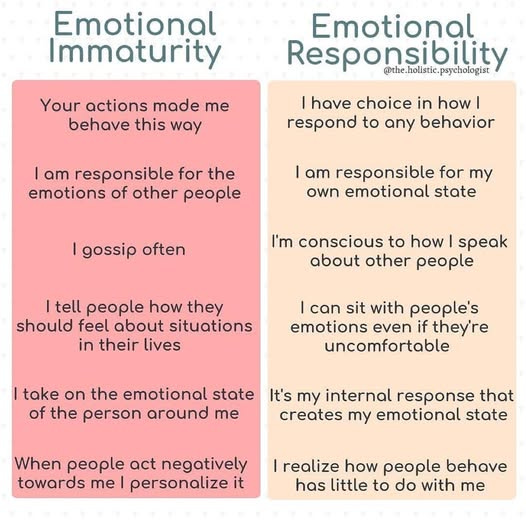
Last time we went over the basis for this post, in the story of Laura and her sister Carrie. What impressed me about this story is that it takes place over just a few pages, and yet, there is aggressive responsibility happening. In the first part, Laura wants to dodge her responsibility of not keeping her sun bonnet nice, but when she is reminded that she has made the choice not to, she accepts that she is the one to blame. In the last part, there is real danger involved, and real emotions like fear of death, and in the end, both girls see themselves as the ones to be held to account.
In both of these examples, it is evident to me the emotions that are going on., When Laura wants to wear Mary’s sunbonnet, it is because going to town is something that frightens her, but also something that is rare for her. Looking your best in those days, that was basically part of life’s job description. You represented your family and, by extension, your upbringing. If you looked unkempt, that would be a bad mark against your parents. Even if you were financially not well off, and Laura’s family certainly wasn’t, you still needed to put effort into your appearance, and your manners. Thus why they both changed dresses before leaving. The dresses weren’t nicer dresses, but they were fresh, and would make a better impression on the townspeople.
In the second part, all the emotional aspects are on clear display, and yet in the end, it is still a matter of fact. X happened, and Y was the result. X doesn’t care about their emotions, neither does Y. They exist, regardless of how anyone feels about it. In fact, Laura even says as much in her prose. There was no reason to bother speaking about it if they were lost. It would change nothing. Now, I don’t necessarily agree with not speaking at all, because someone might come up with a plan on how to remedy the situation that wouldn’t otherwise be heard or maybe even thought of, but not complaining about it is what she is trying to convey here, and that I agree with. There is a clear separation between the emotions, and the responsibility aspect, and I appreciate that.
I think somewhere along the road, there was this scrapping away of the boundaries between I feel bad, and feeling bad is bad, and I don’t have to, so I refuse to deal with anything that makes me feel that way. A great deal of what makes people feel bad are things that they are responsible for, and they don’t like the emotions that accompany that responsibility. If they were lost in the slough, and got out, they would be pointing at one another, stating with clarity that it is indeed the other person’s fault, and they would be racing each other to get to Ma and Pa to throw the other one under the bus.
In the Christopher Scholtes case, neither one of the parents wanted to take responsibility for that girl’s death. The mother sure wanted to act like she had been wronged somehow, but all the sympathy in the world for her dead child can never erase:
“How many times have I told you to stop leaving them in the car?”
Right there, all the hand-wringing for her pain should have ended with such abruptness that the silence feels alive. A responsible person has this happen with her child once, and maybe forgives, but lays down some heavy ground rules. Probably an ultimatum, but definitely doesn’t look the other way. Twice? Bye, dude. That’s it, and that’s all. No further chances. The fact he did this with all of the children, multiple times each, that should have been the end of the marriage, but she didn’t want that burden of having to act for the safety of her children. She just wanted to wag her finger and continue to allow the abusive deadbeat to take care of them. It was easier, after all, and divorce is a lot of trouble.
I think that there is a weird thought process when it comes to the notion of psychopaths and responsibility. On the one hand, it is expected that we are unable to predict the consequences of our actions, and on the other, we will lie pathologically to avoid the consequences of our actions, and I’m like, wait… you can’t have both. Either we can’t predict them, or we lie to avoid them, but we aren’t able to live in two dimensions at the same time.
In reality, what’s happening is this. We often don’t think about consequences, but if we do, then it’s, meh, that’s pretty unlikely… I can get away with this. When we don’t, it’s hmm, who can be blamed for this while I sneak out the back? When that doesn’t work, it is the response of, okay, and? It isn’t that we can’t, we simply don’t think that the chances are high that we will see those consequences, and if we do, there is likely a way to sidestep them. If both fail, all right, let’s get this over with.
However, I think that there is something to be said about the emotional aspects of responsibility that are making lessons for psychopathic children a bit difficult. If you tie emotions with the idea of taking ownership of something, then you end up with a construct that psychopaths are going to ignore. If one and the other are the same thing, and we only see the transactional side of it, but can’t relate to the emotional side, then we are going to disregard the whole thing. It’s the same thing with people that trespass against us. We see this in others, and it is a whole emotional affair. Someone does something terrible, and it creates all these emotions. They may or may not cut the other person off, but the emotions tend to dictate the outcome.
For us? Trespass against one of us, you’re gone. We don’t have the emotional aspects, and to us, this means that we see your transgression as one of transaction. I put in this amount of effort into knowing you and keeping you around in my life. That is repaid with betrayal, so you can leave, right now, and forever. No second chances. People do not understand the finality of it for us. They usually have a way back in. They can guilt-trip, manipulate, they can play on the long-standing friendship or relationship. It can’t be over, not that easily. It never is with anyone else, so clearly that isn’t the case here either. This creates an unwinnable dynamic, and one that puts them in an even deeper hole in our book. You cannot guilt-trip a psychopath, as we cannot feel guilt, but that doesn’t mean that we don’t understand what you’re trying to do. We do understand it, and we don’t appreciate the effort.
Back to teaching psychopathic children. I was going to put a hyperlink here to my post about why you cannot call a child a psychopath, with all of the nifty information about children’s brain development, and I cannot find one. Have I not written about this? If you remember a Substack post about that, can you let me know? If not, I apparently have a post to write. Anyway…
Neurotypicals tend to only think of things in terms of the whole experience, instead of breaking them down into parts. I went over this in my fear post, and why the definition of fear encompasses the emotional aspect, as well as the physical aspect of adrenaline. This makes a difference. Psychopaths can feel an adrenaline dump, but, oh my, I just thought of something while writing.
Psychopaths metabolize drugs differently, very differently, which is why we lack the ability to become addicted to things. However, this also applies to other medications. You can script out something for me, expecting one result and getting a totally paradoxical result instead. Something that should make me tired, gives me energy, something that should give me energy has no effect at all, etc.
I think part of the reason why psychopaths are so calm in bad situations is twofold. One, we have no emotional experience of fear, and two, we metabolize adrenaline either differently, or faster, or both. That is why we have the initial experience of adrenaline, but then are very calm. The adrenaline, just like painkillers, is metabolized probably faster, and differently, so the effect is short-acting and not overwhelming for our systems. I don’t know this for certain, but it makes sense to me.
Anyway, back to the combining of emotions and actions, and why that sucks. Back in the day, when people really thought about things, and not all people, the philosophers who had time for this sort of thing, they would teach lessons about separating your emotions from your actions. These thoughts laid down the groundwork for self-actualized adults. People who could see their emotions and decide how they would react to them, and also push on to do what needed to be done in the face of a lot of adversity. Can you imagine having twelve kids and only three survive? Now? People lose one, and that’s all she wrote. Their whole lives fall apart. Back then?

Going to get a photograph with the deceased was the only thing that they would have to remember them by. There are a ton of memento moris with children. People knew that a child living to adulthood was hardly a given, so they dealt with the loss, when they could they got a memento, prior to memento moris, they did death masks, and they got on with their lives.
Laura Ingalls had a brother who died in childhood that isn’t well known about, and she herself lost her baby boy to unknown causes. She had one surviving child named Rose. Her sister Mary almost died due to what is now thought to be viral meningoencephalitis, but in the books is described as scarlet fever. She didn’t die, but she did go blind from it, and never regained her sight. In the show, the blindness happens all at once, but in reality it was a slow, progressive thing that Mary never once complained about. She lost her sight with dignity and grace, because that was all there was to do. Did that mean she didn’t feel awful about it inside? No. It means that she understood that these are the cards at hand, and her choice was to play them, or quit.
People now quit way too easily. They both stirred together the quagmire of actions versus emotions into a vile stew, but then condemned that stew as unpalatable, and now refuse to partake. When a child does something wrong, they are usually taught through some sort of emotional communication why what they did is wrong. It makes so-and-so feel a certain way. It makes us disappointed in you. That’s dangerous, and you should be scared of that danger. Regardless of the actions, it is pretty much always met with an emotional reason why that action is a bad thing.
That doesn’t work for a psychopath. You might as well be speaking in gobbledygook to us. You have to be able to say X equals Y, and this is the logical reason to avoid that. For example, don’t wander off in public. There are people that can take you, and do terrible things to you. That I can understand. They won’t tell a kid that because it might scare them, but psychopathic children cannot be frightened, and not telling us ends with one of us just f*cking off somewhere and not telling you about it. I used to do this, and it wasn’t that I was unaware that it upset my parents, I just didn’t care.
“It scares us” is not a thing for a psychopath. It’s dangerous, and there are bad people in the world might not do it either. You need to be specific. It cannot be an emotional plea, it needs to be a logical one.
“Don’t steal. You can earn things you want this way,” and then give a clear path by which that thing can be obtained. Also, with a psychopathic child, you have to be honest. You can’t play that parent game of getting the kid to do what you want, then decide that you won’t live up to your end of the bargain. We don’t feel trust. We either see you do what you say, or we don’t. If you don’t, and you are trying to make agreements with us, we have no reason to believe you, or honor our end of the bargain. You won’t, so why bother? Negotiations are agreements.
When it comes to responsibility, if you have all this emotion tied up in it, and because of that emotion, people don’t want to accept ownership, so they avoid it, why should we do any different? One of the reasons my parents were successful with me, and trust me, it was a series of acting grace on their part, was because they didn’t mix emotion with action. These were separate things. Maybe it is because that is just who they are, I don’t know. You might think, you had a sister, how did they raise her? Was it different? I have no idea. I never paid attention. She had nothing to do with me. She existed, but how they interacted with her wouldn’t have registered. It’s just not how my brain works.
However, I do have an example with my niece, because they raised her for a time, and while I don’t really know how they interacted with her, I did see some of the results. When I was a kid, the housework was my responsibility. This was really good for me, because it would not have occurred to me to undertake those chores without expectation. It was my job to vacuum, dust, mop, sweep outside, clean the bathrooms, do the dishes, and sometimes cook, among other things. When I say that instilling this responsibility into me was one of the best things they could have done for me, I am not exaggerating. I needed that to be part of my upbringing. They understood that rewards were far more effective than punishment, and I was rewarded for this, but that didn’t mean I was some angel. I was not. Despite all of that, I was still a little nightmare.
When I was older, my mother was telling me that my niece had the responsibility of cleaning her bathroom. That’s it. One bathroom… and I’m like… wait. I literally had the whole house to deal with, and she has her bathroom, as I glance at it, and see it clearly hasn’t been cleaned in quite a while. Granted, this difference could be because they were meeting me where I was as a kid, and knowing them, that is a large part of it. Or, it could be that because they were older, and my mother had employed a weekly housekeeper, the rest of the house was taken care of, and there wasn’t anything else to do. Either way, there was a stark contrast.
You can’t mix emotion and action and then reject the whole lot. One is separate from the other, and that separation gives you room to decide how that emotion is going to affect you. What actions will you take because of how you’re feeling? Are you going to just wallow in the emotion of it all? Lay down in the proverbial slough and give up, or are you going to decide that it doesn’t matter how you feel? You know what must be done, and will do it.
A friend of mine, who is very sage-like, has a saying. Well, he has lots of sayings, but this is one of them.
What you fear most is what you should do next.
As usual, I have a psychopathic version of it, because the fear part doesn’t apply. What you don’t want to do most is what you do next. I never want to vacuum my house. I would rather be doing something fun. However, the vacuuming has to be done, and around here, it has to be done every day. That is the joy of having animals, but not enjoying animal fur on everything, so vacuuming must be done.
My parents instilled in me a responsibility. Chores come before the things you want to do. I do the chores, then I get to do what I want. I utilize this value every day. I don’t get to do the things I want, until the things I need to do, get done. No excuses. It’s easy to hold myself to now, because they started with me when I was little, and they never put any emphasis on whether or not I wanted to do those chores. So what if I didn’t? It didn’t change the fact that they had to be done, so I might as well get to it.
Because people have decided that it is easier to give a place at the table of necessary action to their emotions that whine about the bargain, people have slipped into a sense of, I don’t want to, so I don’t have to. If my emotions say that it’s something that’s a burden to me, I don’t have to entertain it, for even a second.
Wrong. Life does not care about how you feel about anything. You can ignore your responsibilities, sure, and your life will be infinitely harder. Or, like Christopher Scholtes, you can be arrested for murdering your kid by baking her to death in a car, because being responsible doesn’t feel good. It’s funny to me, while his case is an extreme version of this, I see the more minor versions every day, and as a psychopathic person, which means I come hardwired with a desire to not do anything that doesn’t appeal to me, how do these people not get sick of their own whinging and bad outcomes from their terrible decision-making? It seems like such a waste of epic proportions.
Did you know that there are kindergarten teachers that have kids coming to their classes now, that are not potty trained, and the parents expect the teacher to do it? Seriously? What the actual hell are they on about? That is a parent’s job. No one else’s, and yet, teachers have been talking about this quite a bit lately. How about the ones that just stick their kid in front of a screen and then are shocked that they suck at school, have no discipline, and can’t read? How did you think those things came to be? Did you think they were magic and would just manifest in your child by the grace of God or something? People would rather do what they want, then complain about the results. They would rather not be responsible because that makes them feel bad, but then can’t understand why their lives are so hard.
It’s mind-numbing to watch, as well as baffling. When society is outdoing psychopaths on the whole, do what you want and see if it works out, that’s a problem.
Oh.
Well.
My reward? If it is easier, automated, if there is slight potential to make it easier, I shall pursue that way until I actually put in more work than if done normally. And once accomplished, hoo wee, I will not tire of it. I refuse to be Sissyphus.
Why?
Because the payoff is less manual work in the future!
Basically how I automated my job using AutoHotkey. A job that took 5 days took 3 or so hours now. And I did NOT tire or all. Because of my secret automated one-key method. Bah! Who will copy numbers by hand when you can simply automate copy paste to do it 5 times faster!!!
Oh and I remember one post of yours. Some japanese horror ghost, child in your lap, wasn't afraid, you were like, sure this child is a psychopath, then few months later... The child is afraid of the movie now. Maybe 4 years old child. And the child used to copy the voice of ghost or smth.
In terms of the comments about the internal battle that goes on in neurotypicals between logic and emotions. I can understand that it must be very difficult for a psychopath to appreciate the intensity and controlling nature of emotions when they themselves don’t experience them and where they do, they are milder and short lived.
Something else to consider here is the self focus of the psychopath. I think perhaps this also changes the emotional experience. Without emotional empathy a psychopath cannot truly bond with another person on an emotional level. When a neurotypical experiences strong emotion, to my mind it often originates externally to themselves. Essentially, it isn’t driven by me, it’s driven by things outside of me that I’m bonded to.
I love my dog, he is old now, I fear his loss. I imagine his loss as I look at him and I grieve his loss in advance. Why would I spoil the enjoyment of the time I have left with him by grieving his loss now? It isn’t logical, it’s emotional because, I am bonded to my dog.
I love my daughter. She is being bullied in school. Not the physical type of bullying, the silent ostracisation type. Some days I get her all boosted up, ready to go in and take on the world, during the car journey she starts to quieten, I see her fold inwards as I drive, I drop her off and watch her as she walks in. My heart breaks several times a week. I worry about her all day until I can collect her, get her in the car and drive away. I build her up, we talk it through, get her ready to take on the world… I am bonded to my daughter.
There is a forest close by where I live. I walk into the forest and there is just me, the noise and the tasking of daily life is left behind. I feel totally at peace. The smell of damp trees and sounds of birds and small animals going about their day. One of the few places I experience calm, I rely on this place to reset and stabilise my emotions, to feel myself in myself. I need this time and this space to feel grounded again. I am bonded to the forest.
I think in part emotions are understood but perhaps downplayed in the mind of the psychopath because when they imagine an emotional experience they imagine it through their own internal focus, when external is usually the true emotional generator. That said, to imagine emotions that you have never experienced must be incredibly difficult. Emotions are thought through in the psychopath, not felt.
Sorry, wandered off the key point of the article there! Thank you, yes I feel much better!!